
Measuring What Matters in UX
Why common product metrics often fail to reflect real user experience, and how the HEART framework helps teams measure what actually matters.
June 13, 2023 · 3 min
That which is measured improves.
Pearson's Law
When a measure becomes a target, it ceases to be a good measure.
Goodhart's Law
A basic metric is any sort of algorithm that measures some kind of performance. The same handful come up again and again:
- Pageviews
- Clicks
- Uptime
- Active users
- Revenue
What is interesting about these is that each one carries a field with it. Uptime is an engineering metric. Revenue is a business metric. They were built to answer somebody else’s question.
That is the problem with non-UX metrics. They are hard to read in a user-centered way, and the data they produce is difficult to tie back to the work we actually do.
So what is a UX metric
A user-centered algorithm measuring performance.
The tool worth knowing here is the HEART framework, developed at Google in response to exactly this gap: non-UX metrics were failing both at measuring experience quality and at producing useful data.
HEART
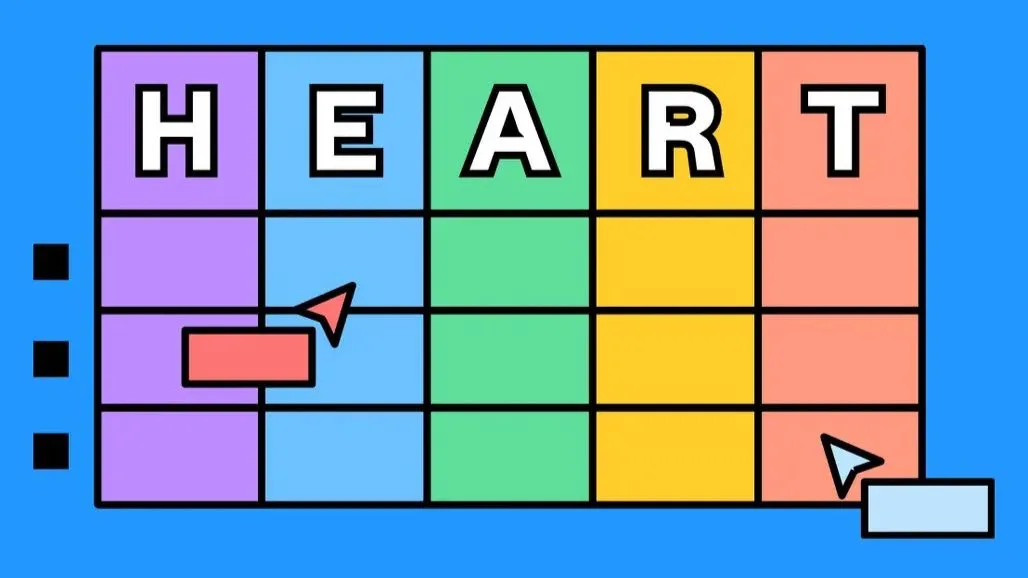
HEART stands for Happiness, Engagement, Adoption, Retention, and Task Success. The categories are there to help you define specific metrics that track progress toward a goal, rather than metrics that happen to be easy to collect.
Happiness covers user satisfaction. Task Success covers effectiveness and efficiency. Engagement, Adoption, and Retention are the newer three, made possible by collecting behavioral data at scale.
Each category takes different methods to fill:
- Happiness. People enjoy your product. Surveys, in product or over email. Keep the wording standard and watch the response rate.
- Engagement. People use your product often. Per-user log analysis, how many times a user acted, time spent.
- Adoption. People are starting to use your product. Point-of-sale data, unique users starting out on new devices or new licenses, daily active users.
- Retention. People keep using your product. Users active in an initial window against a later one.
- Task Success. People complete what they came to do. Per-user log analysis, task completion rate.
The point
Used together, these give deeper insight than any single number, and better decisions about what to change.
But it is worth saying plainly: this is not about measuring for the sake of measuring. It is about measuring what matters and then doing something with what you learn. Measure wisely, and build experiences worth the measurement.